“Extra Hot” Does Not Mean What You Think It Means
A Chinese supplier and an American buyer can use the same four heat words and mean different things by all of them. That gap is the most common avoidable problem in a first chili order, and it is worth ten minutes before you send an inquiry.
Why the same word means two things
When a Chinese supplier writes mild, the comparison is to Xiaomila or Mantianxing, chilies that are genuinely hot. Mild here means “this one is for aroma, the heat is not the point.”
When an American buyer reads mild, the comparison is often a jalapeno or a supermarket chili flake. Mild reads as “almost no heat at all.”
Those two scales overlap badly in the middle. Our medium can land hotter than an American hot, and our mild can land near an American medium, depending on the variety.
There is a second layer. In Guizhou a chili is judged on heat and aroma, and the two are always described together. “Mild and very fragrant” is a compliment here, not an apology. A buyer reading that in English often hears “weak.”
Where our range sits
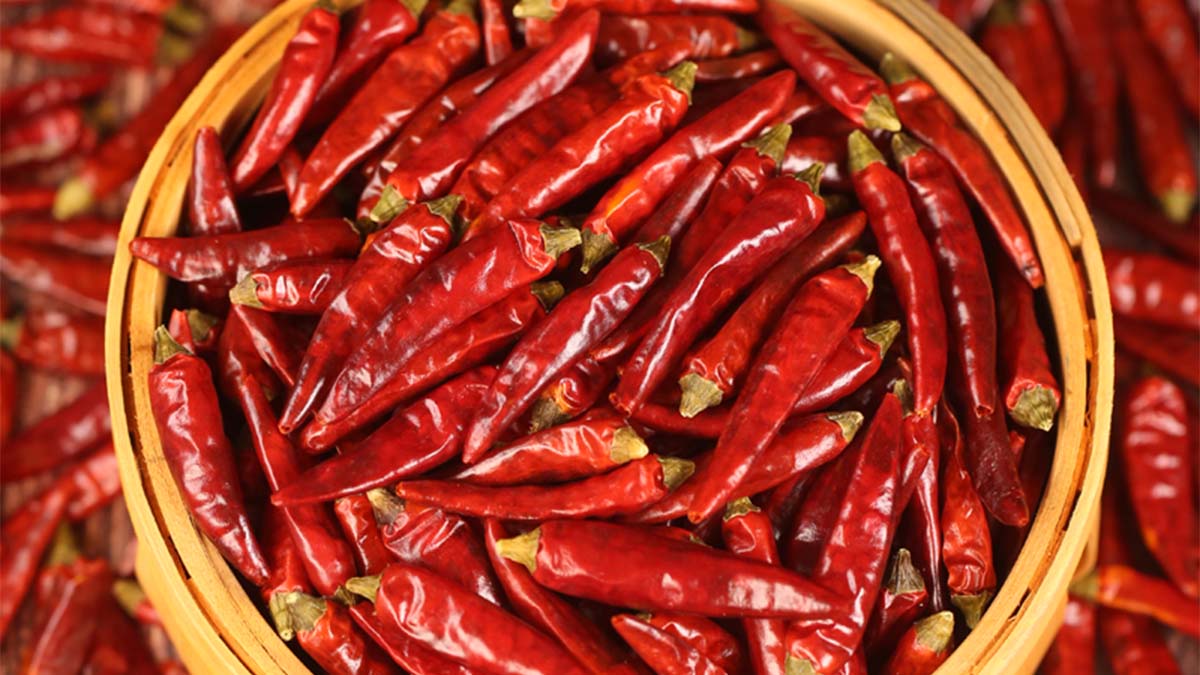
Four of our eight dried chilies are mild and bought for aroma: Erjingtiao, Huaxi, Xinyidai and Denglongjiao. Two are medium with real heat behind the smell: Tiaozi and Zidantou. Two are extra hot: Mantianxing and Xiaomila. Our variety guide goes through what each one is actually for.
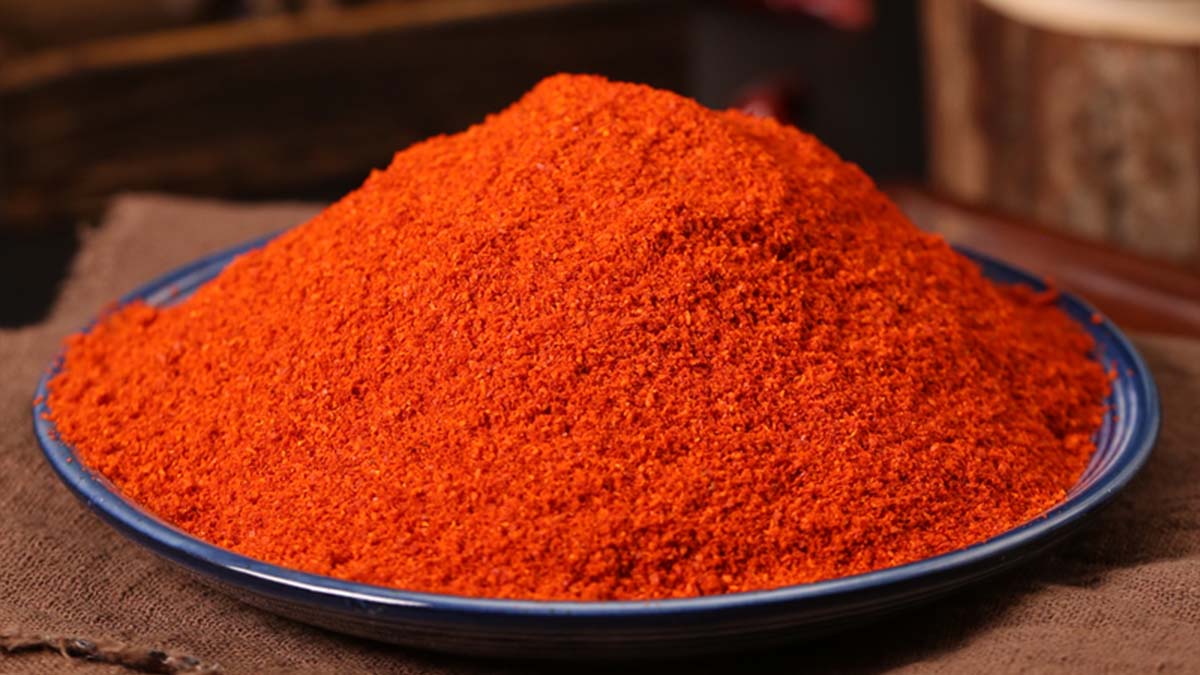
One level sits above all of them: our Super Hot chili powder, sold fine or coarse. It is the hottest chili we make and nothing in our range goes above it. Buyers who tell us their current supplier is not hot enough usually end up there.
Two things worth noticing about that spread.
Half the range is mild. That is not a gap in the catalog. It reflects how chili is used here, where a dish takes its fragrance from one variety and its burn from another, added separately in whatever proportion the cook wants.
And there is nothing in the “hot but not extra hot” band. If you want a single chili that is properly hot without going to the top of the scale, the honest answer is to blend Tiaozi with a small proportion of Xiaomila rather than to buy something labeled hot.
For a reference point at the mild end: Erjingtiao is commonly quoted in the range of 5,000 to 8,000 Scoville, which is jalapeno territory. It is bought for aroma, not for that number.
Four things that change perceived heat after it leaves us
Even with the variety fixed, how hot it lands depends on what happens on your side.
Form. The same chili ground fine tastes hotter than the same chili whole, because far more of it meets the tongue. Switch from whole to fine powder at the same weight and expect a jump.
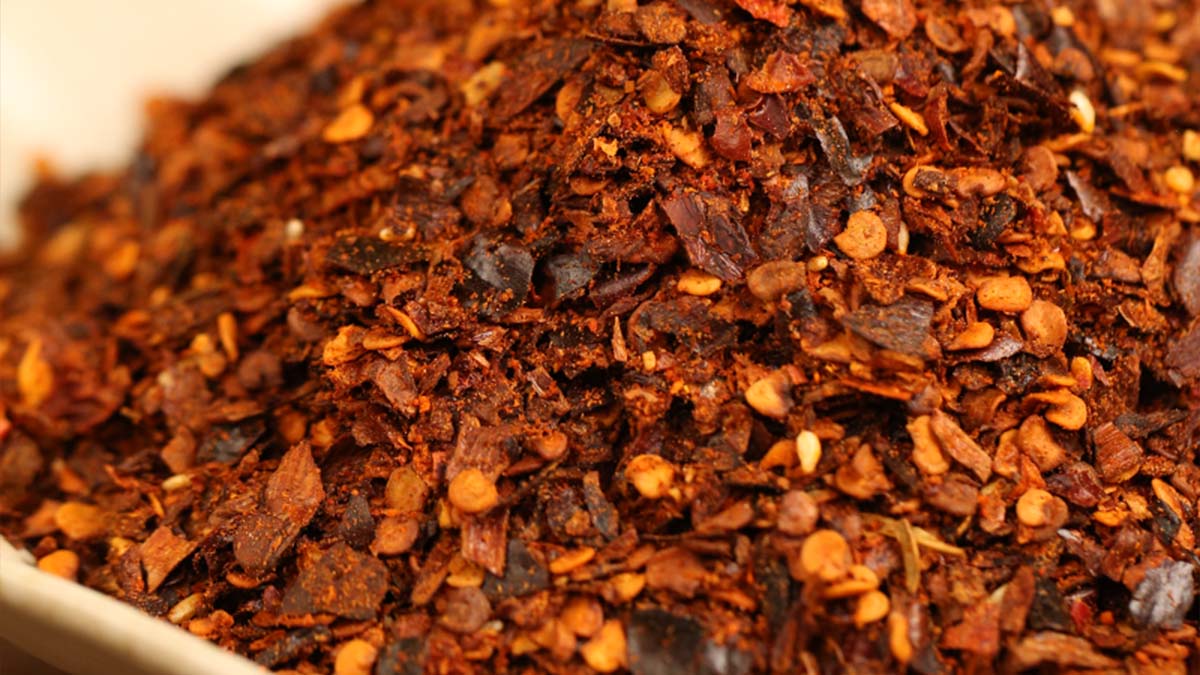
Seeds. Segments and flakes include the seeds and the pale membrane, which carry a disproportionate share of the burn. Whole chili with the seeds shaken out is a noticeably milder ingredient than the same chili cut into segments.
Cooking time. A chili simmered for an hour gives up more of its heat into the dish than one tossed in at the end. The one tossed in at the end tastes sharper on the tongue even though less heat went into the food overall.
Fat. Capsaicin dissolves in oil. The same quantity of chili in a fatty braise spreads heat across the whole dish; in a watery soup it stays concentrated and hits harder in spots.
None of this is exotic. It is simply why “we used the same chili and it tasted different” happens.
How to specify heat so we get it right
Stop sending adjectives. Send one of these instead.
A variety name. The most precise thing you can do. “Erjingtiao, whole” leaves nothing to interpret.
A reference product. “As hot as the chili flakes on an American pizza,” or “as hot as the sample from our current supplier, which I am sending you.” We can match against something real.
A dish and a role. “For chili oil, aroma matters more than heat” points us at Erjingtiao or Huaxi. “For a hot pot base that has to smell strong and burn” points at Mantianxing.
And the thing that saves everyone the most time: order more than one and compare. Our wholesale minimum is 5 kg per product. Taking 5 kg each of a mild, a medium and an extra hot costs little, and after one afternoon of cooking you will never need the word “medium” with us again.
Two mistakes we see repeatedly
Buying the hottest thing on the list by default. Extra hot is a specialist ingredient. If your menu is not built around it you will use a quarter of what you ordered and the rest will sit in the back losing aroma.
Assuming heat is identical between crops. It is not, for any chili, from any supplier, anywhere. Growing season, rainfall and the position of the pod on the plant all move it. If batch-to-batch consistency matters to your formulation, say so at the inquiry stage rather than after the second shipment.
What to send us
Product name, quantity, destination country. If heat matters, add a reference point rather than an adjective. If you are not sure, describe the dish and let us suggest two to test against each other.
We would rather talk you out of the wrong chili before you buy it than sort it out after it has crossed the Pacific.