
Before a dried chili leaves the factory, it passes through several checkpoints. Hand-sorting is the last — and the most demanding.
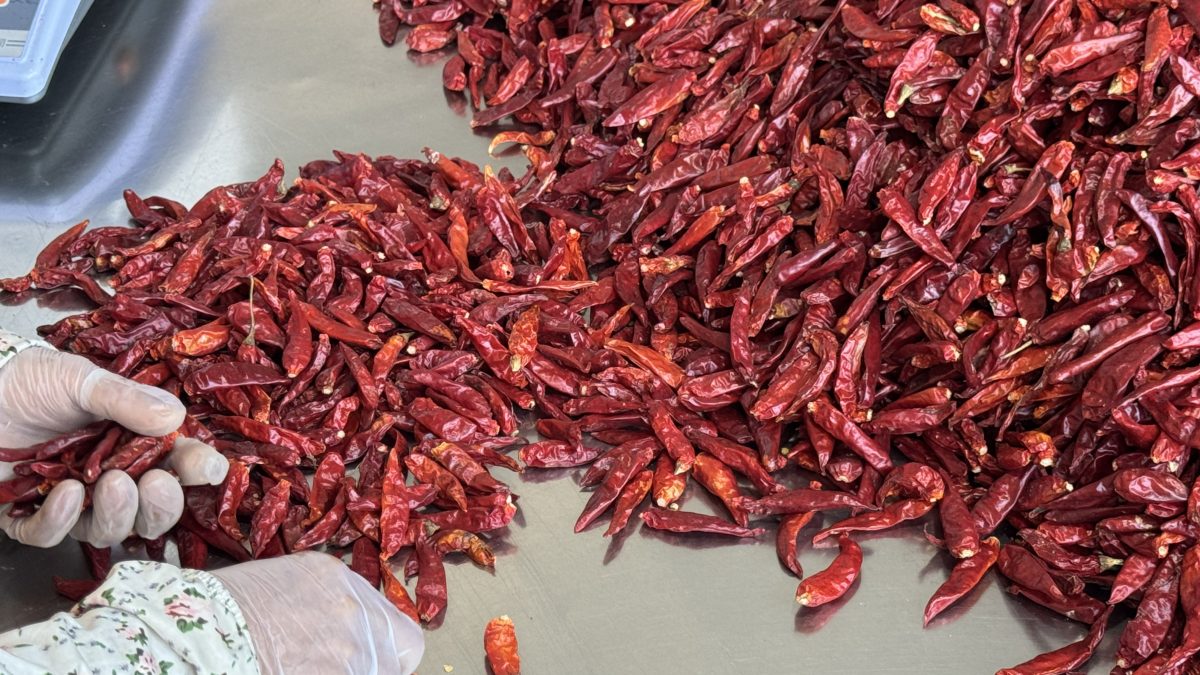
Before a dried chili leaves the factory, it passes through several checkpoints. Hand-sorting is the last — and the most demanding.
What are the workers’ eyes searching for at the sorting table? It comes down to four things: color, shape, dryness, and cleanliness.
Color means luster. A properly sun-dried chili glows deep red; anything dull, pale, or dark-spotted comes out. Shape means wholeness. Broken, crushed, or flattened pods would spoil the look of the grind and the finished product, so they can’t stay. Dryness is judged by touch — a gentle squeeze, and only the crisp ones pass; soft or leathery pods still hold too much moisture. Cleanliness means no foreign matter: stems, leaves, little twigs — nothing gets a pass.
The standard takes a few sentences to explain and years to master. A newcomer sorts all day and the veteran still spots the misses at a glance. After two or three years, the flawed pods almost seem to jump out on their own.
People ask why this step isn’t left entirely to machines. Our answer is simple: chilies are an irregular crop, and every pod has its own temperament. The patch of mold hidden on the far side, the softness you only feel in a squeeze — human eyes and hands still read them best.
Hand-sorting is never fast. But every pod that lands in the finished pile has been looked at, carefully, at least once. That’s something we intend to keep doing.